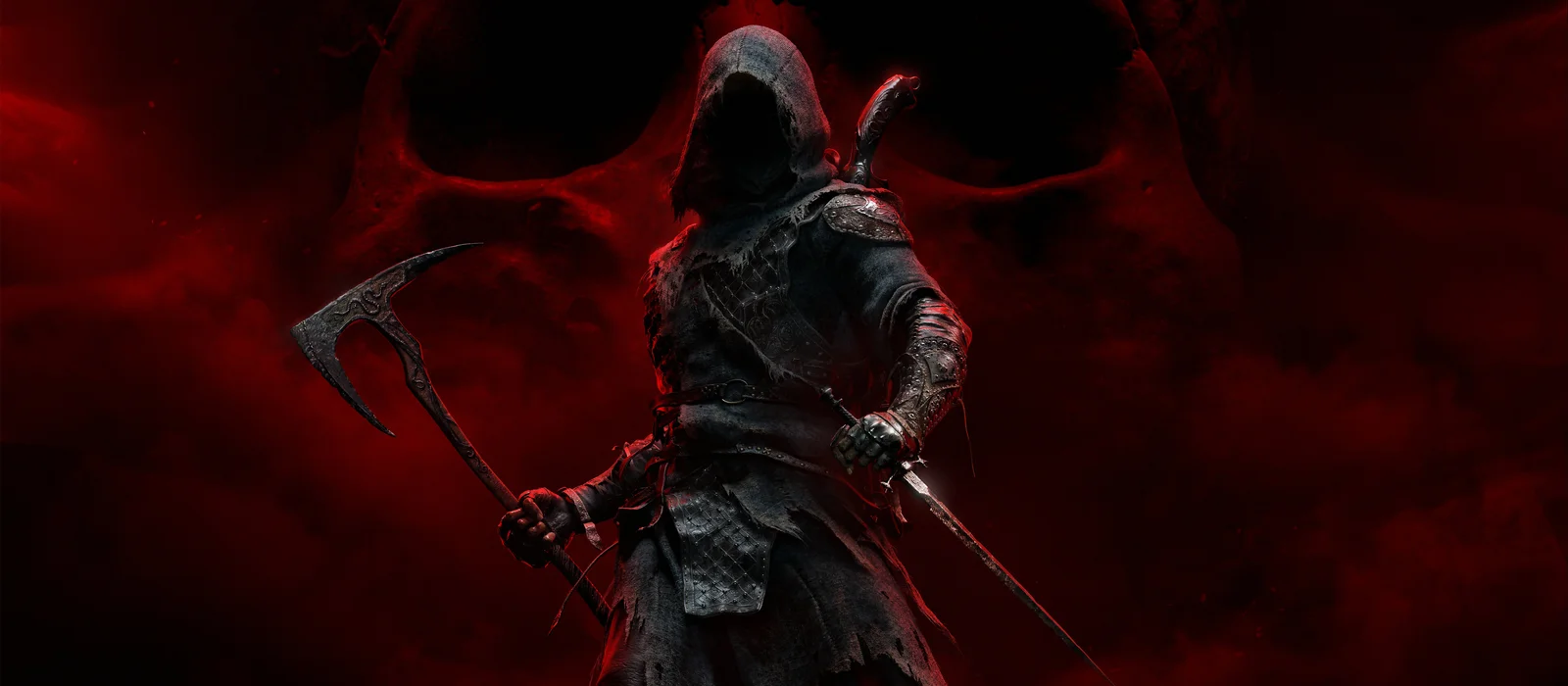
Análise de Mortal Shell 2 — o melhor soulslike de 2026?
8.0 Yuri Zdesev
Mortal Shell 2 é um exemplo brilhante de sequência perfeita. A Cold Symmetry pegou as melhores ideias do original e as desenvolveu ainda mais, ao mesmo tempo que reformulou por completo seus conceitos mais questionáveis. As áreas pequenas e fechadas do primeiro jogo deram lugar a um mundo aberto completo, com estrutura vertical e muitos calabouços. O sistema de combate ficou muito mais variado graças às novas habilidades de classe, ao arsenal ampliado e a um sistema de progressão que permite experimentar livremente diferentes builds. Há muitas novidades e recursos únicos, e nada parece supérfluo. Ainda assim, alguns pontos poderiam ser melhores. Nesta análise, vamos examinar tudo em detalhes.
Plataforma: PC (Intel Core i5-2300 2,8 GHz, NVIDIA GeForce 1050 Ti, 8 GB de RAM);
Tempo para concluir: 35 horas.
Requisitos do sistema
Mínimos: Intel Core i5-10600, 12 GB de RAM, NVIDIA GeForce GTX 1060 / Radeon RX 580, SSD de 30 GB;
Recomendados: Intel Core i7-12700 / Ryzen 7 5700X, 16 GB de RAM, NVIDIA GeForce RTX 3070 / Radeon RX 6700 XT, SSD de 30 GB.
Cavaleiros de dois reinos
A jornada começa com um prólogo linear. O protagonista, o Harrower, segue até Bone Keep. Sua missão principal é encontrar os frutos de uma entidade sagrada conhecida como Undermother. Um deles será encontrado a caminho da fortaleza, mas ainda há muitos outros, e ninguém sabe exatamente onde estão. Para trazê-los de volta, o Harrower terá de atravessar os dois reinos de Fallgrim, assolados pela influência maligna de uma entidade misteriosa.

Fiel à tradição do gênero, o jogo não entrega a história de bandeja, e sua premissa central — coletar os frutos da Undermother — não é particularmente motivadora para quem quer mergulhar na narrativa. Por isso, essa acaba sendo a parte mais fraca do jogo. Ainda assim, o fio condutor da trama, contado por meio das memórias de oito heróis caídos, tem seu mistério. Mas, para ver todos os fragmentos de memória e montar o quadro completo, primeiro é preciso encontrar os corpos desses heróis espalhados pelo mundo aberto.
A noite é escura e cheia de bônus
A página de Mortal Shell 2 no Steam descreve o mundo aberto como pequeno, mas isso diz respeito principalmente à sua extensão. Graças ao design vertical dos cenários, mesmo uma pequena área do mapa oferece muito para explorar. Por exemplo, uma região começa em uma vila, com as ruínas de um castelo de vários andares acima dela; sob o castelo e a vila, há alguns calabouços, e um acampamento de bandidos fica entre eles. Quase todo o mundo do jogo segue uma fórmula semelhante: em vez de campos enormes e vazios, temos áreas densas, com várias camadas e bastante variedade.

A missão incansável do Harrower de coletar os frutos o levará a praticamente todos os cantos. Espere encontrar ruínas de castelos outrora majestosos, florestas, terras devastadas e áridas, pântanos sombrios, cenários outonais marcantes e cidades subterrâneas inteiras que lembram a Cidade Pestilenta de Dark Souls. Tudo tem uma identidade visual coesa e, em sua maior parte, está integrado ao mundo aberto, mas também há áreas lineares separadas, acessíveis por portões especiais. Os mundos além desses portais estão ligados aos chefes da história, e cada um tem uma atmosfera própria.

Não é difícil encontrar os portões para os mundos dos chefes explorando, mas a localização deles também aparece no mapa se você conversar com Ruk, um corvo sinistro que serve como guia no jogo. Se encontrá-lo pelo mundo aberto, ele marcará os portões no seu mapa. De todo modo, falar com essa ave é essencial, já que a maior parte do mapa permanece coberta pela névoa de guerra mesmo depois de visitarmos uma área. Assim, se você avançar pelo mundo sem dar atenção ao corvo, terá de se orientar às cegas, confiando apenas na memória visual. É um pequeno toque hardcore — mas está longe de ser o único.

Na prévia de Mortal Shell 2, comentei que o jogo parecia fácil, mas suspeitava que o equilíbrio mudaria até o lançamento. E mudou. Na versão final, os inimigos batem mais forte e têm mais vida. Portanto, não dá para dizer que Mortal Shell 2 é fácil. Além disso, a beta não oferecia a liberdade disponível no jogo completo — e é justamente ao explorar o mundo que a dificuldade se revela por inteiro.

É possível chegar à maioria das áreas do mundo principal por vários pontos de entrada. A estrutura ramificada também permite escolher caminhos diferentes durante a exploração. Esse design favorece a descoberta, mas tem uma particularidade hardcore. Os faróis, equivalentes às fogueiras de Dark Souls, são extremamente raros. Às vezes, uma área inteira tem apenas dois. Se tiver sorte, você encontrará um farol quase assim que chegar a uma nova região, mas, na maioria das vezes, terá de vasculhar quase tudo sem encontrar nenhum. Com isso, você acaba vagando por muito tempo sem um ponto de controle e quase sem vida. Muitas dessas jornadas terminam com a perda de todas as suas almas — ou, neste caso, de todo o Tar.
Ainda assim, essa não é a dificuldade máxima. Depois do prólogo, você terá a chance de obter a “Chama do Tarnight”. Se acender a vela no topo de Bone Keep, a noite cairá sobre o mundo aberto e o jogo ficará mais difícil. À noite, os inimigos ficam mais fortes, e você também terá acesso a pontos de interesse e missões indisponíveis durante o dia. Como o desafio aumenta, os inimigos derrotados rendem mais Tar. Completar as missões noturnas também garante uma recompensa realmente valiosa.

Missões variadas surgem com bastante frequência no mundo aberto. Às vezes, são tarefas longas que podem levar a uma nova carapaça ou arma, mas também há missões curtas, muitas vezes escondidas em calabouços. Em uma delas, por exemplo, caí numa armadilha e fui parar numa cela de masmorra sem equipamento algum. A missão era escapar de uma pequena caverna cheia de bandidos. Pelo caminho, encontrei alguns bilhetes que explicavam o que estava acontecendo. Pode não parecer grande coisa, mas, graças à forma como é apresentada, uma simples limpeza de calabouço virou uma pequena aventura com um toque de narrativa. Esse tipo de momento costuma aparecer em RPGs focados na história, mas é uma abordagem incomum para um soulslike.
Apesar de todos os seus méritos, a mudança para um mundo aberto também trouxe um problema comum a quase todos os jogos desse tipo. A maioria dos minibosses não passa de inimigos comuns com atributos aumentados, usados para preencher espaços. Muitas vezes, eles não têm originalidade alguma, e enfrentá-los não exige mecânicas novas, uma estratégia específica ou uma mudança de tática.

Mas esse defeito não se aplica à maioria dos chefes da história. Eles têm características únicas que fazem valer a pena, antes de certas lutas, redistribuir os pontos da build ou até trocar de carapaça.
Uma canção de Tar e brilho
As carapaças de Mortal Shell 2 são, na prática, classes, cada uma com um estilo de jogo próprio. A carapaça bárbara de Gragyr, por exemplo, permite recuperar vida usando um artefato único que carrega conforme causa dano aos inimigos. Essa mecânica lembra a reposição de frascos em Lies of P. Já a forma do alquimista Sariel permite recuperar parte da vida perdida com contra-ataques, como em Bloodborne.

Mortal Shell 2 tem oito carapaças ao todo, e é possível desenvolvê-las sem medo de estragar a build. O sistema flexível de progressão gira em torno de três recursos. O Tar é usado para aprimorar os atributos básicos, que aumentam automaticamente conforme você sobe de nível. O Brilho libera habilidades das carapaças, e elas são aprimoradas com pontos de carapaça que não são consumidos. É possível redistribuí-los em qualquer farol. Assim, você pode experimentar habilidades e reorganizar seus pontos de acordo com a situação. Esse modelo de progressão também reduz bastante a barreira de entrada para iniciantes.

As pedras especiais chamadas tarites também são parte essencial da montagem da build. Elas ocupam espaços de equipamento e existem em três tipos. Algumas concedem bônus passivos, outras oferecem técnicas de combate, e um terceiro tipo aplica vários efeitos temporários em troca de consumir a barra de “Determinação”.
Essa barra é usada principalmente para ativar as habilidades de classe. Gragyr desfere um poderoso golpe atordoante; Sariel lança espinhos que infligem maldições; e a caçadora de monstros Proxima usa um cabo com choque elétrico. A Determinação é recuperada ao causar dano, então um estilo de combate agressivo permite usar habilidades e técnicas poderosas com mais frequência.

O sistema de combate reformulado ficou mais dinâmico no geral: a barra de vigor deu lugar a uma mecânica de desequilíbrio. Embora tenha sido inspirada em Sekiro: Shadows Die Twice, a luta em Mortal Shell 2 ainda lembra mais Bloodborne. Isso se deve, em parte, à personalização de classe, que permite abrir mão dos aparos se você quiser, e ao uso frequente de armas de longo alcance nos combates.
O sistema de combate não tem falhas dignas de nota. Ainda assim, há alguns problemas para acompanhar sequências rápidas de ataques inimigos. A animação de bloqueio, que também serve para aparar, tem um período de recuperação que torna impossíveis os aparos rápidos e ritmados. É provável que os desenvolvedores tenham incluído essa proteção para que o bloqueio no tempo certo funcione corretamente. Mas esse pequeno problema só aparece se você apostar nos aparos, e pode ser contornado mudando de tática contra inimigos velozes.
Você está planejando jogar Mortal Shell 2?
***
Em resumo, vale reforçar que Mortal Shell 2 é uma sequência exemplar, com um mundo aberto cuidadosamente construído e repleto de segredos, um sistema de progressão flexível e várias classes, cada uma com seu próprio estilo de jogo. Apesar das influências, o projeto mantém uma identidade própria graças ao visual e às ideias de jogabilidade únicas. Com isso, Mortal Shell 2 se tornou um dos melhores jogos do gênero soulslike.